
The Bridging Study: Sustainability Workshops and Key Learnings
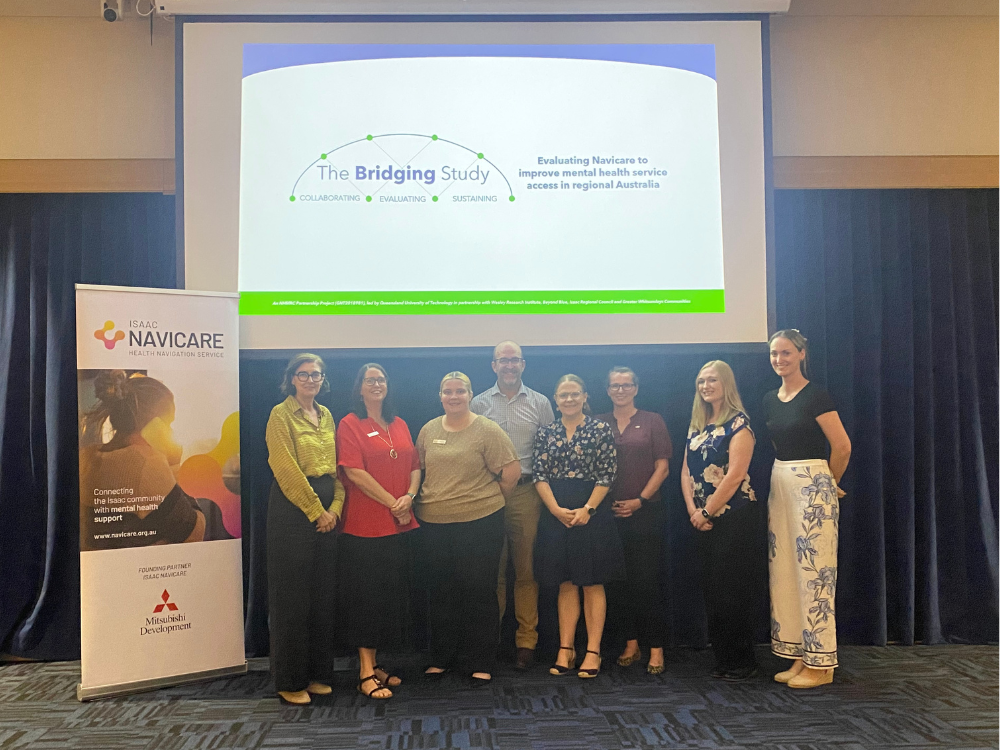
Throughout the year, sustainability workshops were held in Clermont, Moranbah and Sarina as part of The Bridging Study, examining the implementation, uptake and use of Isaac Navicare, as well as factors influencing local sustainability.
The Bridging Study team travelled to Sarina on 22nd April 2026 to conduct the final site sustainability workshop which examined the Sarina Navicare service, including its implementation, uptake and use, and factors influencing local sustainability. Discussions also considered community mental health needs, strengths and core components of the model, and perceived barriers and enablers within the Sarina context.
The study team is grateful to the participants of this workshop who generously shared their time, expertise and ideas in discussions with QUT researchers. It was attended by two Bridging Study researchers, three Care Navigators, and three local service providers with understanding of the model, service and local context. Following the workshop, an interview was conducted with another local service provider.
It was identified that the hub's physical co-location and Care Navigator presence were working well for the community, as well as referral pathways from local GPs, persistent and tailored follow-up of clients, and flexible support pathways. The limited availability of local services were identified as a challenge, as was the gap in mental health support for young people in the region. Considerations to support sustainability in the future included targeting priority populations, building an economic case for the service, and addressing the current limitations related to capacity and workforce by increasing the number of available Care Navigators in the region.
Findings from this workshop will be combined with data from previous consultations, workshops, interviews, and service datasets, to contribute to the final findings of the Bridging Study. These will be reported in presentations, publications, and other outputs across the remainder of 2026 and 2027.
The Bridging Study, conducted in partnership with Queensland University of Technology (QUT) and in collaboration with community stakeholders, is generating evidence regarding the role of care navigation in rural communities and how it can improve access to mental health and wellbeing services.
Key preliminary insights from the research include:
Local services matter.
Relationships matter.
Navigation reduces barriers.
Flexibility improves access.
Communities value person-centred support.
The study data suggests that care navigation may help reduce barriers commonly experienced in rural communities, including limited service availability, long wait times and difficulties understanding referral pathways. The research is indicating the value of flexibility and person-centred approaches, recognising that individuals often require different types of support depending on their circumstances and that successful navigation involves tailoring assistance to meet those unique needs.
The knowledge generated through this research will contribute to future discussions about mental health service design, rural health policy and innovative approaches to improving access to care. The voices of Isaac region residents will continue informing future service models across Australia.
Former clients of Isaac Navicare and service providers are welcome to connect with the QUT team to anonymously share their experiences of seeking mental health support in their communities. The information shared will provide important insights that will inform future mental health service models both within Queensland and nationally.
To arrange an interview, please contact the QUT team at Bridging.Study@qut.edu.au.